
Progress with Biologicals for Fungal Disease control in Peas and Beans
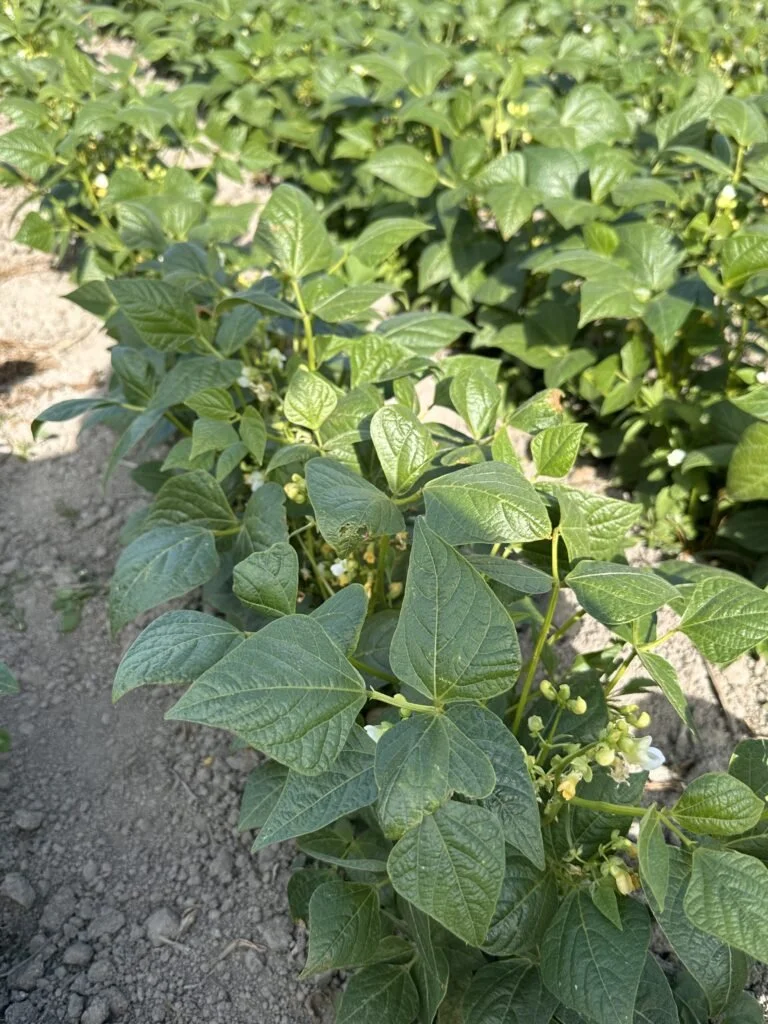
Multiple biological products will reduce fungal disease and increase yields for dwarf beans and peas, but further trial refinement and financial analysis is needed, according to latest results from a project trialling biological products in peas and dwarf beans.
The project involves A Lighter Touch, Process Vegetables NZ, processing companies, Heinz-Wattie’s (KraftHeinz) and McCain Foods, and research partner Bioeconomy Science Institute. It aims to identify biofungicides, biostimulants and synthetic products which are effective against two of key diseases, fusarium root rot in peas and sclerotinia sclerotiorum (white mould) in beans.
Root rot can reduce marketable pea yield by 10–30%, and sclerotinia can reduce pod yield by 10–15% and cause post-harvest damage. Currently, growers have only two fungicides available to use due to international market restrictions on maximum residue levels.
Dwarf bean crop. Credit Nigel Rowe-Lucas.
The third year of trials, in the 2024–2025 season, evaluated the best performing biological products from year one and two in peas and bean trials in Canterbury and in a Hawke’s Bay-based bean trial.
Year three trials aimed to identify effective options for 2025–2026 field trials as well as contributing data to support future label claims and/or registration of products, if the products evaluated were shown to be effective.
An analysis of the financial benefits of using biologicals in pea and bean production compared with conventional systems using synthetic products was identified as an area for future work.
The year three report also highlights the need to consider and understand compatibility of products with each other and with current registered products in order to integrate biologicals effectively into pea and bean crop protection programmes.